In a small company, every financial decision must be well calculated and thought-through. Acquiring an ERP system is one of the most consequential investments a business can make, regardless of its size.
However, the way larger enterprises choose ERP software is vastly different to small businesses. While the former typically focuses on deep customisation, legacy system integration, multi-entity operations and large capacity, the latter prioritises the costs of ownership and the ease of deployment. Still, as a small business, you want a software that can grow together with you, instead of becoming too “tight” within a few years.
This is precisely why cloud-based ERP solutions have become the preferable choice for small and medium-sized enterprises (SMEs). Rather than investing in an expensive, on-premise server infrastructure, cloud ERP provides enterprise-grade functionality that’s easy to integrate and accessible anywhere with an internet connection. So, in this article, we’ll look at 10 of the most popular cloud-based ERP systems for small businesses today.
Do small and medium-sized businesses actually need ERP software?
But first, let’s clear up a common misconception – that ERP systems are exclusively for large corporations with vast IT budgets and entire departments dedicated to software management. It’s perfectly understandable why business owners believed that for many years, but this perception is already outdated.
ERP systems are designed to solve the issues that come with fragmented data across multiple disconnected systems. While small businesses have less data to deal with, it affects them just the same. Juggling many separate platforms leads to inefficient processes, wasted resources, duplicate or incorrect data, higher likelihood of human error or miscommunication, and the inability to make informed decisions (since real-time visibility is not possible).
An all-in-one business management software centralises all data into a single source of truth. From sales management to inventory and accounting, all business processes are fully integrated and information is updated in real time, boosting operational efficiency and productivity. In fact, this could be the difference between achieving sustainable growth and feeling stuck in one place.
Therefore, the question should not be "is my business too small for an ERP system", but rather "which software is the right fit for my unique business needs?".
What are the key factors when selecting an ERP system for a small business?
So what should a small business be looking for in an ERP system? Below are some of the key factors to take into consideration:
Cloud accessibility
For small companies, cloud deployment is almost always the preferred route. Cloud ERP eliminates the need for on-premise servers, reduces the burden on internal IT resources, and provides access from any device with an internet connection. Critically, it ensures you are always running the latest version of the software, with security patches and new features often delivered automatically.
Scalability
Your ERP system should be capable of growing alongside your business without forcing a painful, expensive migration down the line. Look for platforms that offer modular functionality – where you can begin with the essentials (finance, inventory, CRM) and layer in more complex capabilities (manufacturing, project management, payroll) as your operations expand. The ideal ERP is one you choose once and grow into, rather than outgrow within two or three years.
Industry fit
Not all ERP systems are built equally for all industries. For example, a platform specialising in construction specifically might approach inventory management functionality differently to one that focuses on retail and manufacturing. Before evaluating features, identify the non-negotiable requirements specific to your sector, and use those as filters when shortlisting solutions.
Pricing
ERP pricing varies significantly from software to software. Some platforms charge per user per month, whereas others price by module, transaction volume or a combination of all three. For small businesses, it’s important to have real clarity over the cost of ownership, not just for the initial implementation project but for the ongoing costs too (hosting, support, maintenance, etc.).
Support
Most small businesses do not have an in-house IT team to provide ERP support. So, when choosing the best software, they also need to consider the quality of support available. For example, certain ERPs have official partner networks that provide implementation and support services.
Top ERP solutions for small businesses
1. Odoo
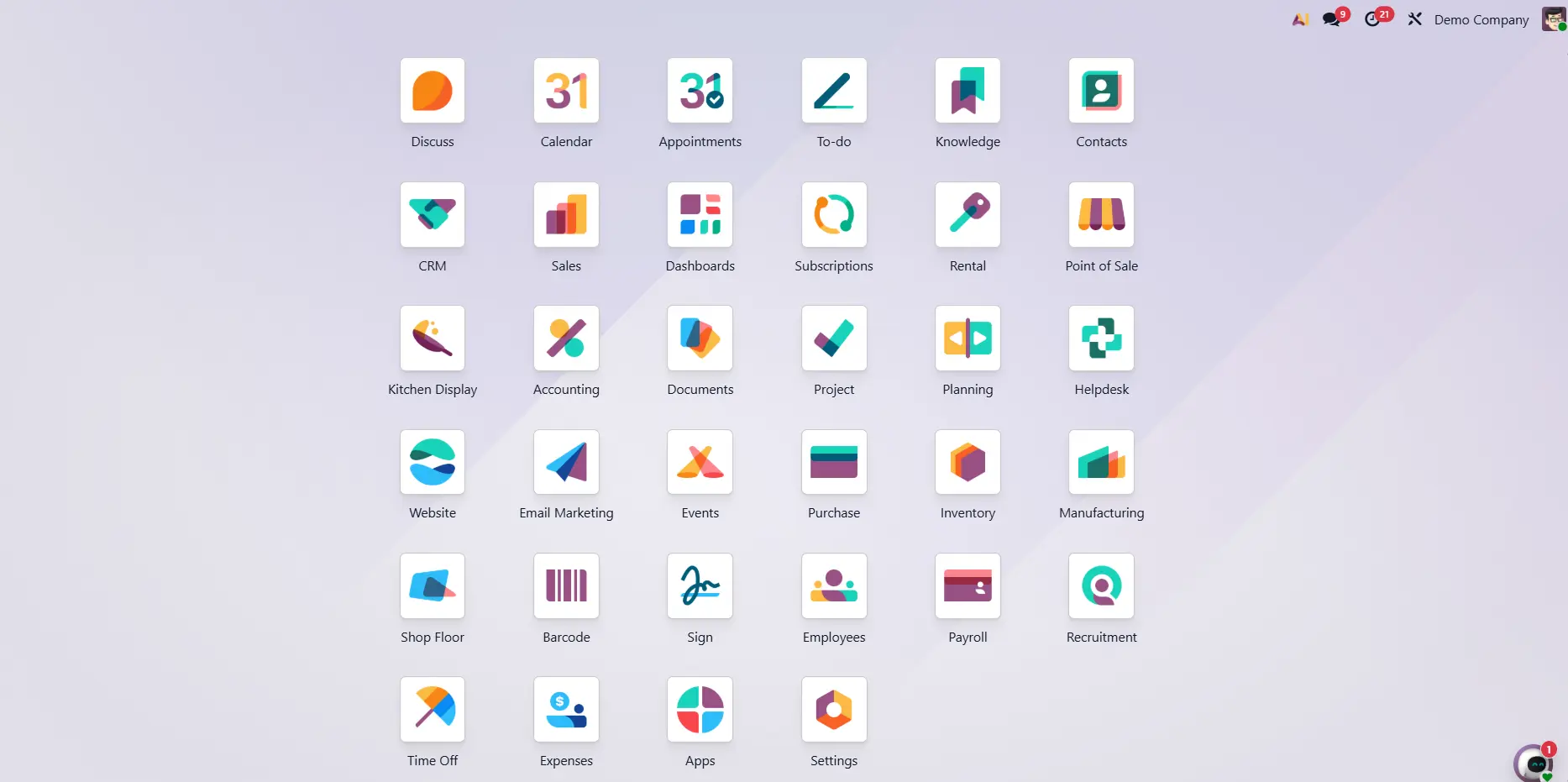
Odoo is one of the fastest-growing ERP systems on the market today, praised for its modular, open-source architecture and modern, user-friendly interface. Designed to serve businesses of all sizes and industries, Odoo’s powerful functionality is highly flexible and adaptable. For small businesses specifically, this means being able to start with what they need and add on when those needs change.
Pricing*: First year from €17.90 / user / month (when paying yearly), afterwards, from €22.40 / user / month.
*Based on Lithuania pricing – it might differ slightly in other countries
2. Acumatica
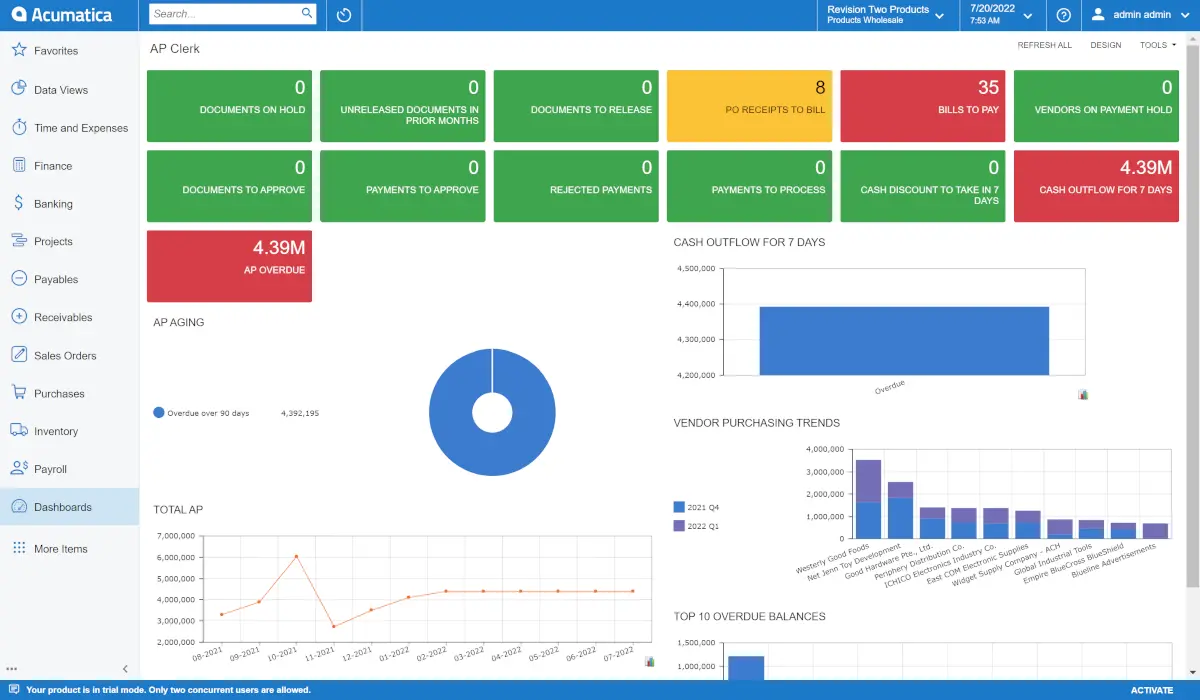
Acumatica has earned a strong reputation for user experience, flexibility and an innovative approach to ERP licensing. Acumatica offers both the classic user-based pricing model and a consumption-based model, where software costs depend on your resource consumption and traction volume. This makes it particularly cost-effective for businesses with large numbers of occasional system users.
Pricing: Pricing depends on resources used (based on public knowledge, from €1500 / month).
3. Microsoft Dynamics 365 Business Central
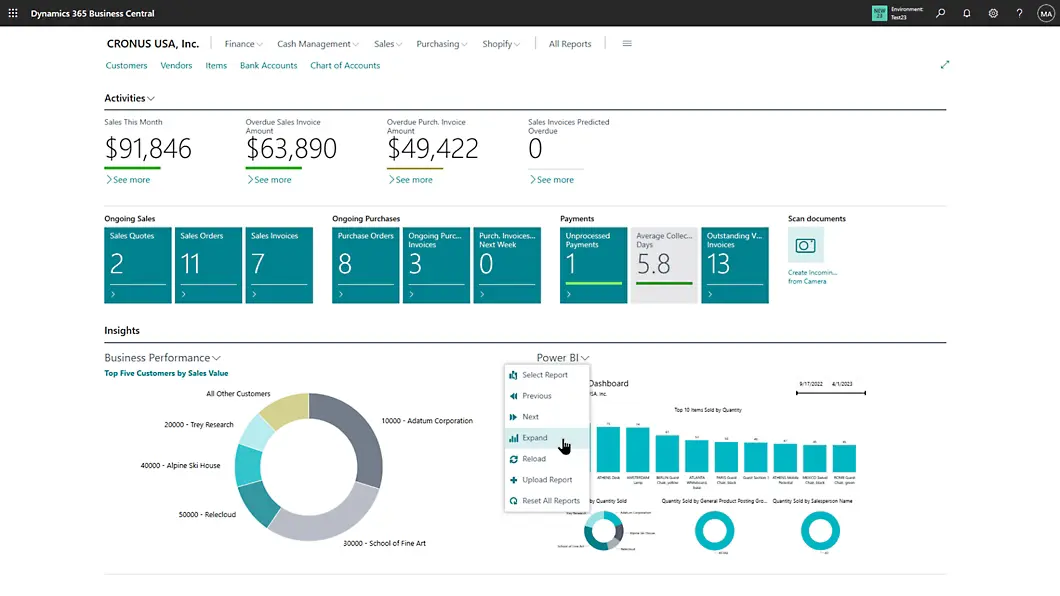
Microsoft Dynamics 365 Business Central is one of the most well-known ERP systems on the list, created for small to mid-sized businesses. The platform is deeply embedded within the Microsoft 365 ecosystem, offering convenient integrations with platforms like Teams, Outlook or Excel, making it a good option for businesses already deeply invested in Microsoft products.
Pricing: From €70.00 ($80.00) / user / month (when paying yearly).
4. Oracle NetSuite
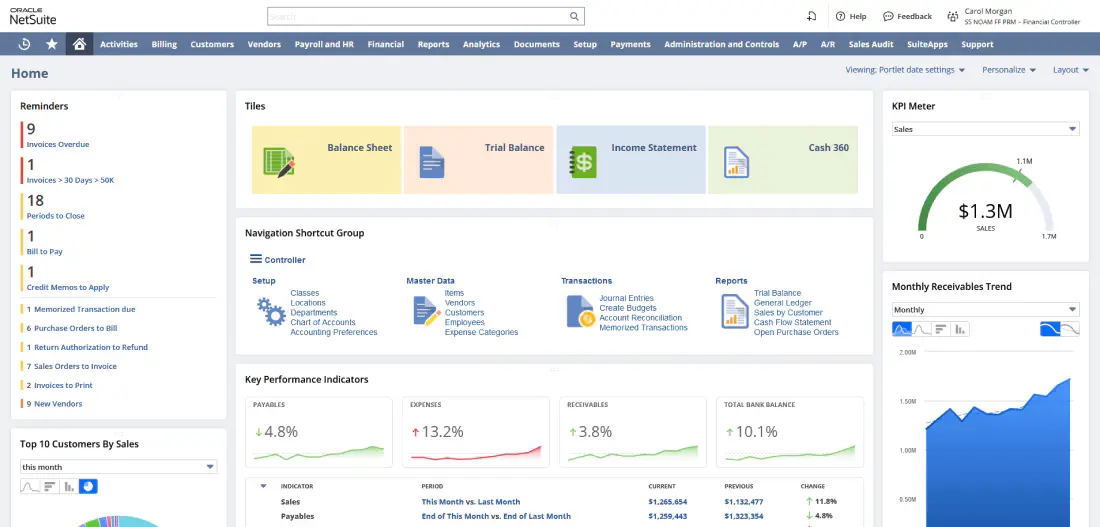
Oracle NetSuite is arguably one of the most established names in cloud ERPs, having pioneered the category before the term was widely understood. The software is considered suitable for small businesses, but ones that are experiencing high growth or have complex operations. Its latest release focuses heavily on financial management and automation.
Pricing: Pricing is not published on the website. Based on public knowledge, licenses consist of a base platform fee of €875.00 / month + €113.00 / user / month.
5. Sage Intacct
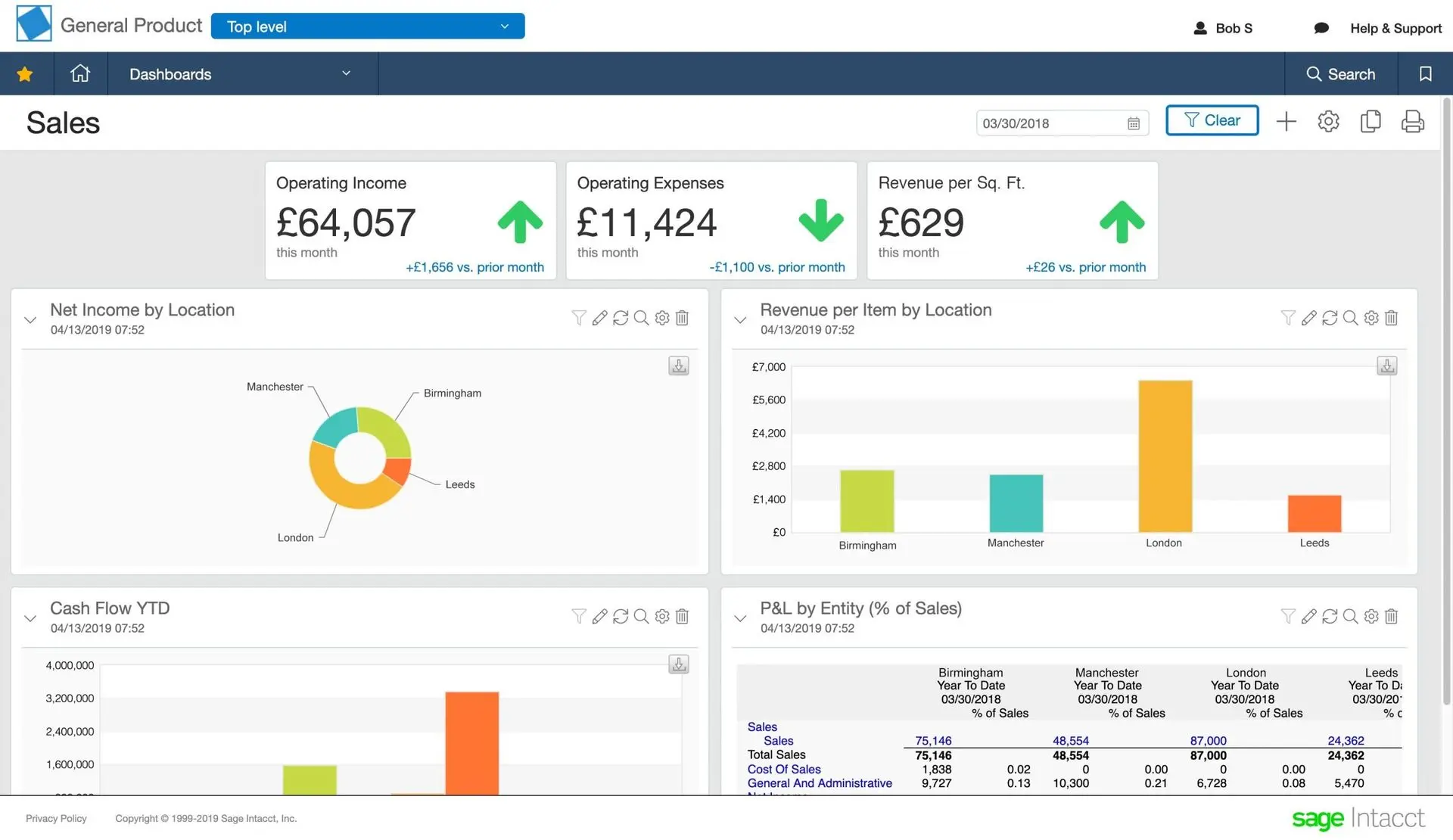
Sage Intacct occupies a distinctive position in the market as a cloud-native, multi-entity financial management system. It is less a full ERP suite and more a best-in-class financial platform, which is a good choice for businesses whose operational complexity lies primarily in their accounting and consolidation requirements (financial businesses, SaaS and professional services).
Pricing: Pricing is not published on the website. According to public knowledge, pricing starts from €175.00 / user / month + base platform fee.
6. SAP Business One
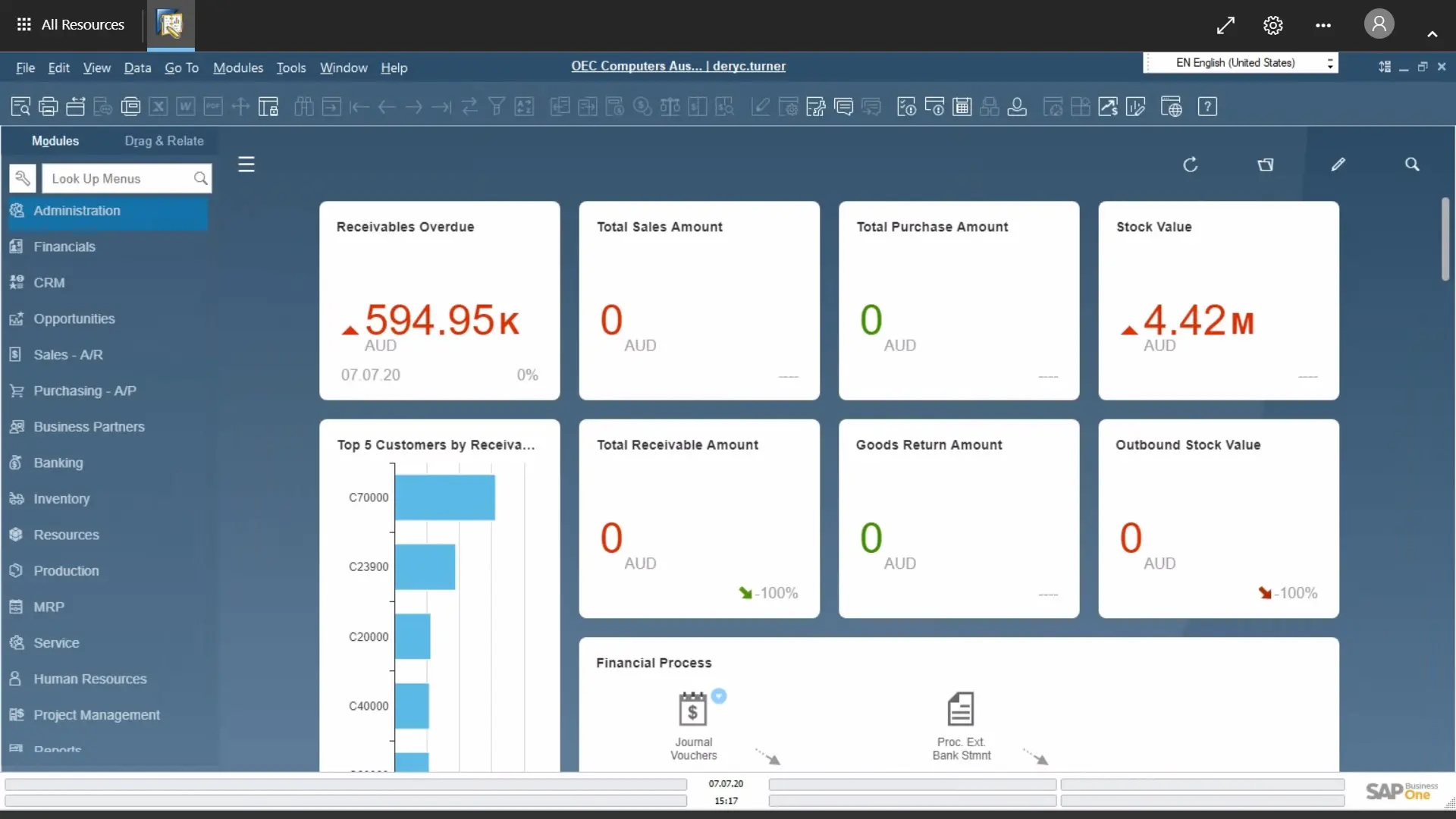
SAP Business One is the SME-focused version of one of the world's largest ERP vendors, SAP. It brings the structural rigour and process discipline that the SAP name implies, although that may also come in exchange for flexibility and user-friendliness compared to more modern platforms. Nonetheless, SAP Business One provides a stable and controlled operational environment for businesses that value process integrity.
Pricing: Pricing is not published on the website. According to public knowledge, it starts at €33.00 / user / month (basic functionality, limited to a maximum of 5 users).
7. Brightpearl (by Sage)
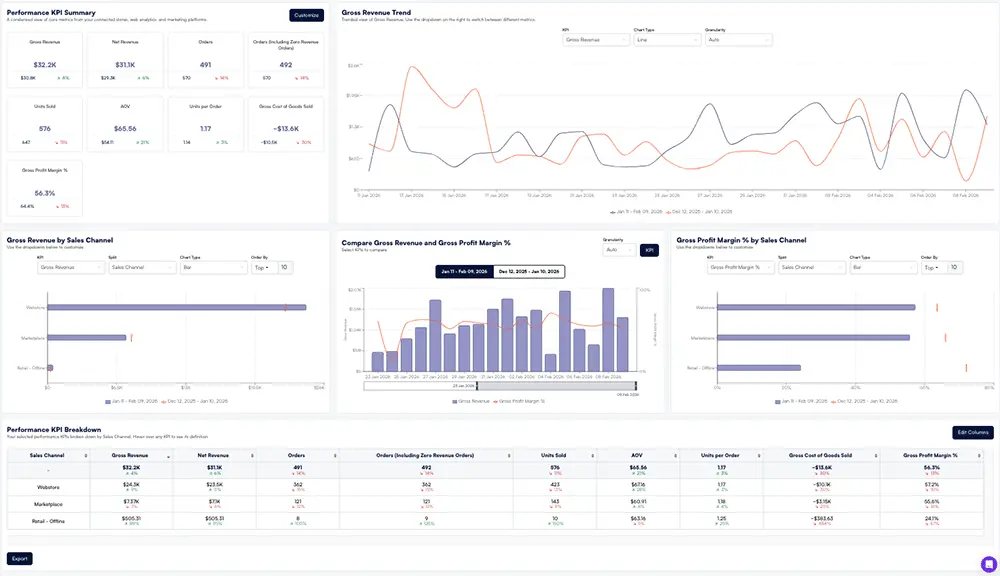
Brightpearl takes a deliberately focused approach, positioning itself as a Retail Operating System (ROS) rather than a traditional ERP. Its functionality is built specifically for digital-first retailers, wholesalers, and direct-to-consumer brands that require such functionality as real-time margin analysis at the individual SKU level. For digital merchants managing high transaction volumes, the specificity may be a feature rather than a limitation.
Pricing: Pricing is not published on the website. According to public knowledge, it starts from €235.00 / user / month.
8. Epicor Kinetic
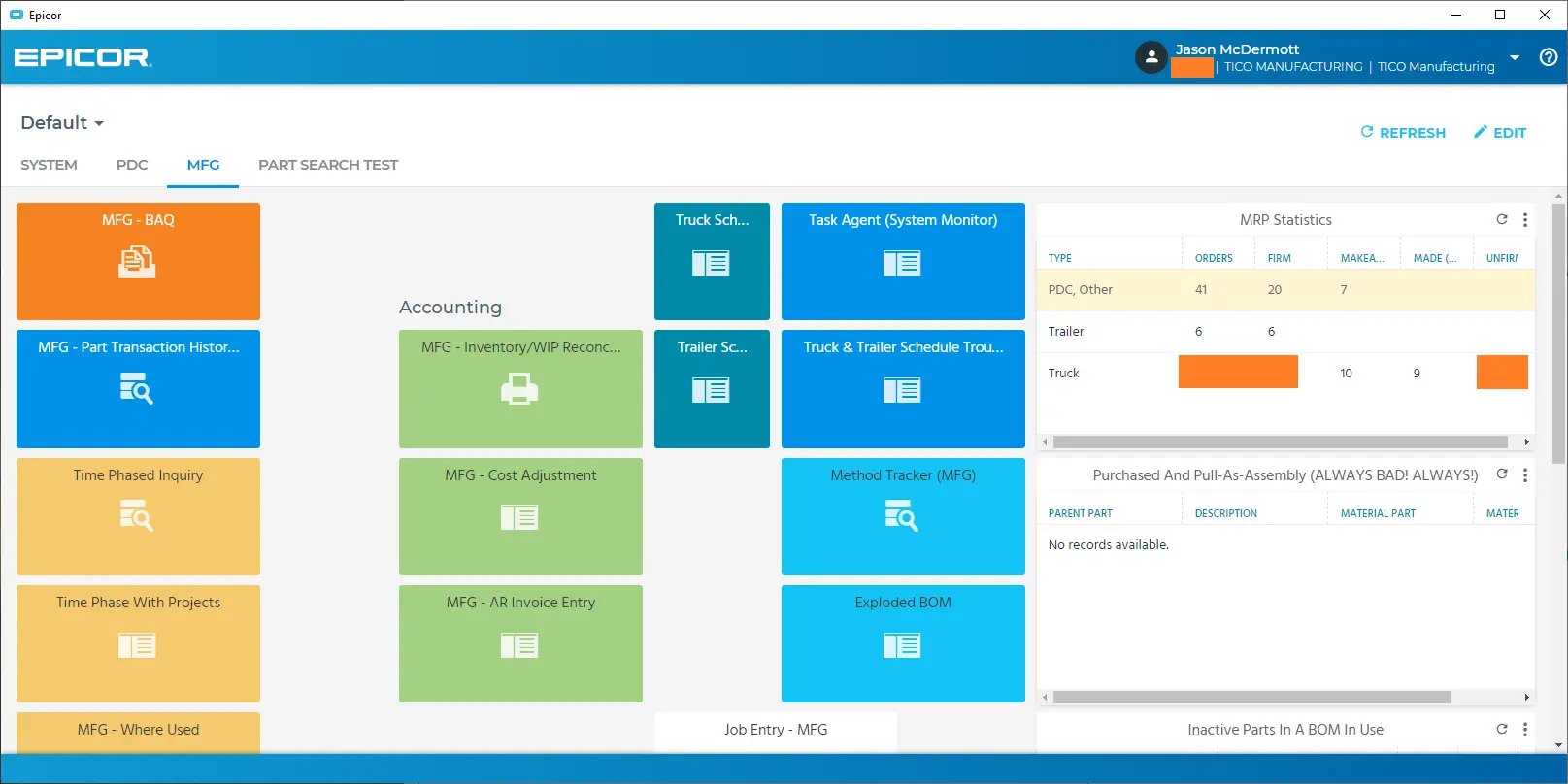
Epicor Kinetic is a cloud-native platform built with a clear primary purpose: managing complex manufacturing operations without requiring extensive and costly software customisation. For small manufacturers navigating intricate shop floors and strict regulatory environments, it is one of the most complete solutions in its class. Epicor Kinetic is particularly well-regarded in sectors where strict regulatory compliance tracking and full production traceability are non-negotiable.
Pricing: Pricing is not published on the website. According to public knowledge, it starts from €70.00 / user / month.
9. Syspro
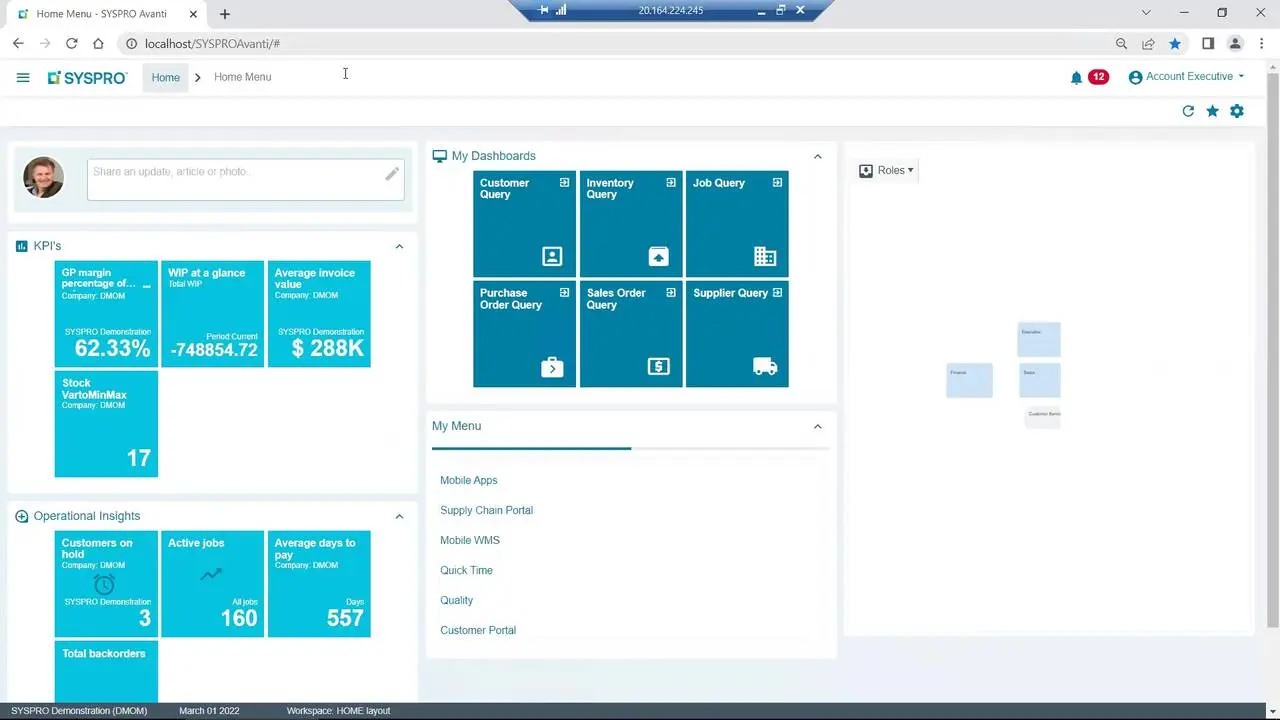
Syspro occupies a focused niche in the ERP landscape: supply chain-centric businesses that require inventory precision, structural simplicity, and a low total cost of ownership. It’s not trying to be all things to all businesses, but rather focus on one target audience. The software is particularly popular amongst manufacturing and distribution sectors.
Pricing: Pricing is not published on the website. According to public knowledge, it starts from €65.00 / user / month.
10. Infor CloudSuite
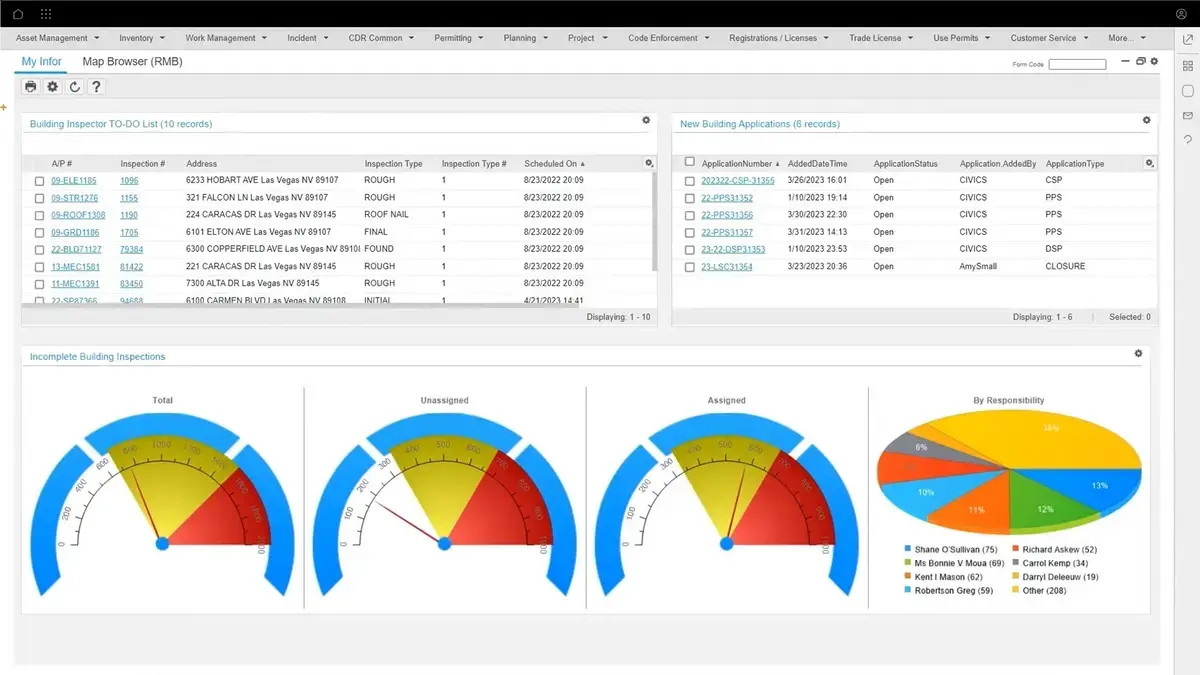
Infor CloudSuite rounds out this list as one of the most industry-specific offerings in the selection. Built natively on Amazon Web Services (AWS), it delivers enterprise-grade functionality through pre-configured industry suites that are designed to require minimal customisation from the outset. Therefore, it’s a strong option for small businesses in specialised industrial micro-verticals.
Pricing: Pricing is not published on the website. According to public knowledge, it starts from €140.00 / user / month.
Considering Odoo for your business?
Yes, we’re biased (as official Odoo Partners), but we strongly believe Odoo is the best business management software on this list!
While it's one of the most budget-friendly options on the market, it doesn't fall behind when it comes to functionality and capacitilies. This makes it highly accessible for small and mediun-sized businesses that want excellent value for their money, without compromising on quality
The standard Odoo functionality covers a wide range of powerful functionality, from CRM and accounting to manufacturing and inventory management, without the need for any programming. But, if you decide that you want custom-made functionality down the line, Odoo’s open-source nature provides unlimited customisation opportunities.
If you think Odoo could be the right choice for your small business, we’re here to help. We’d love to hear about your unique needs and challenges:
*The pricing, visuals, and functionality information provided about the systems described is based on information publicly available online as of 2026. If you find outdated information or other inaccuracies in the article, please contact us and we will be happy to correct them.
